
If you’ve ever sat down in front of a proper plate of nasi lemak, you’ll know that while the coconut rice gets a lot of the glory, it’s the sambal that really makes the dish sing. That sweet, spicy, savoury, slightly funky chilli sauce is the heartbeat of Malaysia’s national dish. Get the sambal right and everything else falls into place. Get it wrong… well, it’s just rice with toppings.
In this post, I’m going to show you how to make a proper nasi lemak sambal at home, without making life difficult for yourself. This is one of those sauces that sounds complicated, but once you understand the method, it’s actually very straightforward.

What is Nasi Lemak Sambal?
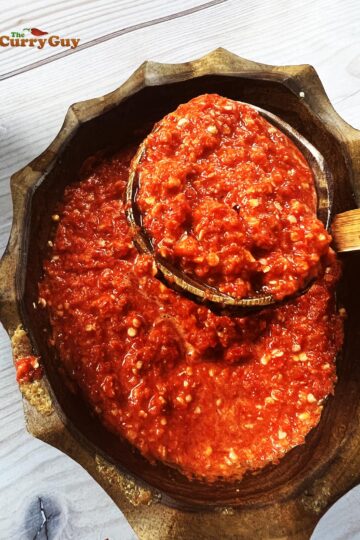
Nasi lemak sambal (often called sambal nasi lemak or sambal tumis) is a slow-cooked chilli sauce made with dried chillies, aromatics, shrimp paste, tamarind, and palm sugar. It’s not meant to be blisteringly hot. Instead, it’s about balance – heat, sweetness, savoury depth, and a gentle tang all working together.
Unlike fresh sambals that are pounded and served raw, this one is cooked low and slow until the oil separates and the flavours mellow and deepen. That’s what gives it that rich, almost jammy texture.
A Bit of Nasi Lemak Sambal History
Nasi lemak is Malaysia’s national dish, traditionally eaten for breakfast but now enjoyed at any time of day. The sambal evolved as a way to preserve chillies and add punch to simple meals. Over time, it became an essential part of nasi lemak, alongside coconut rice, fried anchovies, peanuts, cucumber, and egg.
Every family, hawker stall and region has its own take, which is why there’s no single “correct” recipe – just good technique and good balance.
Ingredients
There aren't a lot of ingredients in a good nasi lemak sambal. Get your ingredients together before you start to make things easy on yourself. The ingredient measurements are listed in the recipe card at the bottom of this page.

See recipe card for quantities.
- Dried red chillies, deseeded if you want less heat.
- Hot water
- Vegetable oil
- Onion
- Garlic
- Shallots
- Shrimp paste (belacan), toasted
- Tamarind concentrate
- Palm sugar, grated (or brown sugar)
- Salt
- Dried anchovies (optional)
Step by step photos
Making nasi lemak sambal is easy. Check out my step by step photos to make things even easier on yourself. The ingredient measurements I use are in the recipe card at the bottom of this page.

- Step 1: First, toast you shrimp paste as it is usually supplied in its raw form. To do this, heat a dry frying pan over a medium heat and fry the shrimp past for 2 to 5 minutes or until it becomes dry and crumbly. It doesn’t smell nice so you need to trust me here. It tastes great in the sambal.

- Step 2: The shrimp paste will look like this when ready.

- Step 3: Blend chillies, onion, garlic, shallots and shrimp paste into a smooth paste.

- Step 4: Heat oil in a pan over medium heat. Add spice paste and cook gently, stirring often, until the oil begins to separate. Then add the tamarind, palm sugar, anchovies (if using) and salt.

- Step 5: Simmer gently for 10–15 minutes until thick, glossy, and balanced.

- Step 6: Taste and adjust seasoning. Serve with Nasi Lemak or simply with rice. It is also delicious served with chicken and other meats. This sambal is usually served warm or at room temperature.
How do you serve nasi lemak sambal?
Of course, it’s perfect with nasi lemak, but it’s also brilliant with:
- Fried eggs
- Grilled chicken
- Rice bowls
- Stir-fries
Useful Equipment
You don’t need much, but these bits help:
- Blender or food processor – for the chilli paste
- Heavy-based saucepan or frying pan – for slow cooking
- Spatula or wooden spoon – lots of stirring
- Small bowl – for soaking chillies
Storage and Reheating
Fridge:
Keeps for up to 1 week in an airtight container.
Freezer:
Freeze in portions for up to 3 months.
Reheating:
Reheat gently in a pan or microwave, stirring well.
Final Thoughts
Once you’ve made nasi lemak sambal at home, you’ll realise why it’s such a big deal. It’s rich, complex and unbelievably satisfying. Best of all, it’s one of those sauces that rewards patience and tastes even better the next day.
Make a batch, stash some in the freezer and you’re never far away from a proper Malaysian feast. Happy cooking!
Top Tip
Taste at the end! Adjust sweetness, salt, and tang when it’s nearly done.
FAQ
It can be, but traditionally it’s more balanced than fiery.
Yes – omit shrimp paste and anchovies.
You can, but dried chillies give better depth.
Related
If you like this nasi lemak sambal, you might like to try some of these recipes too!


Pairing
Nasi lemak sambal isn't only good with nasi lemak. Try it as a side with any of these.


Have you tried this Nasi Lemak Sambal recipe?
If yes, please give it a star rating in the recipe card below and leave a comment. I love receiving your feedback and I’m sure other readers of my blog do too. Thank you.
If you are not already doing so, please follow The Curry Guy on YouTube, Instagram and Facebook for all our latest recipes.
Nasi Lemak Sambal
The perfect accompaniment for nasi lemak but that's not all! This nasi lemak sambal is delicious served with grilled fish, vegetables or simply with white rice.
Ingredients
- 20 dried red chillies, deseeded if you want less heat, soaked in hot water for 20 minutes
- 2 tbsp vegetable oil
- 1 medium onion, roughly chopped
- 3 cloves garlic
- 2 shallots
- 1 tsp shrimp paste (belacan), toasted
- 1 tbsp tamarind paste (or juice)
- 2 tbsp palm sugar, grated (or brown sugar)
- Salt to taste
- A handful of dried anchovies, rinsed (optional)
Instructions
- Soak the dried chillies in hot water for 20 to 30 minutes to soften.
- Toast toast the shrimp paste as it is usually supplied in its raw form. To do this, heat a dry frying pan over a medium heat and fry the shrimp past for 2 to 5 minutes or until it becomes dry and crumbly. It doesn’t smell nice so you need to trust me here. It tastes great in the sambal.
- Blend the soaked chillies, onion, garlic, shallots, and shrimp paste into a smooth paste.
- Heat the oil in a pan over medium heat. Add paste and cook gently, stirring often, until oil begins to separate.
- Add tamarind, palm sugar, anchovies (if using) and salt.
- Simmer gently for 10–15 minutes until thick, glossy, and balanced.
- Taste and adjust seasoning. Serve with nasi lemak or simply as an accompaniment for rice or vegetables. It is also delicious served over chicken and other meats. This sambal is usually served warm or at room temperature.
Recommended Products
As an Amazon Associate and member of other affiliate programs, I earn from qualifying purchases.


Nutrition Information:
Yield:
8Serving Size:
1Amount Per Serving: Calories: 109Total Fat: 4gSaturated Fat: 0gUnsaturated Fat: 4gCholesterol: 1mgSodium: 65mgCarbohydrates: 19gFiber: 2gSugar: 11gProtein: 3g
Leave a Reply